
Composed and played by a musician · 432 Hz and 444 Hz · High-quality, uncompressed WAV
432 Hz music to soothe the body and sleep better
Original listening sessions, written and played by Mathyas Voisin, note by note.
Mathyas Voisin, a cellist certified in sophrology, writes each piece to the rhythm of a breath: to soothe the body, fall asleep, return to calm. You feel the cello's low register as much as you hear it. Sessions of 20, 30 or 45 minutes.
No credit card. Your 3 tracks stay yours, forever.

Relaxation douce
🌟 Sommeil · 432 Hz · 30 s excerpt
- Free excerpts, no account or credit card needed
- Has accompanied on stage Grand Corps Malade, Slimane, Gims, Amel Bent
- Certified in sophrology
- Featured on the GEWA blog
How it works
- 1
Create your free account.
30 seconds, no credit card.
- 2
Choose three pieces.
Depending on your intention: soothe the body, sleep, meditate.
- 3
Listen again without limits.
They are yours, forever.
SoonThe full library is coming soon.
Choose your music by intention
States rather than songs. A piece for falling asleep does not breathe like a piece for finding your drive again.

🌿 Relaxation/Méditation
Détente profonde, lâcher-prise, pause au calme...
See the pieces
🍀 Harmonisation/Rééquilibrage
Cette série est conçue pour travailler directement sur les chakras, dans le but de les nettoyer, d’harmoniser et de les purifier. Pour optimiser l’efficacité, vous pouvez les écouter idéalement le matin au réveil ou bien le soir au moment du coucher.
See the pieces
🌟 Sommeil
Des musiques imaginées pour créer une atmosphère propice à la détente et à l’endormissement.
See the piecesAccompagnement spécifique
Cette catégorie propose des créations sonores conçues comme un accompagnement complémentaire à votre démarche personnelle de bien-être et, le cas échéant, à un suivi médical déjà établi avec votre médecin traitant ou votre spécialiste. Les musiques proposées ont été créées dans une intention d’apaisement, de relaxation profonde et d’harmonisation. Elles intègrent différentes fréquences inspirées notamment des travaux et recherches attribués à Royal Raymond Rife (1888–1971) et à la docteure Hulda Clark (1928–2009). Chaque personne pouvant vivre et ressentir l’écoute de manière différente, ces créations sont avant tout proposées comme une expérience sonore invitant à la détente, à l’écoute de soi et à un moment de pause. Ces musiques ne constituent pas un traitement médical et ne remplacent en aucun cas les recommandations ou traitements prescrits par un professionnel de santé, ni une alimentation équilibrée ou la pratique régulière d’une activité physique.
See the pieces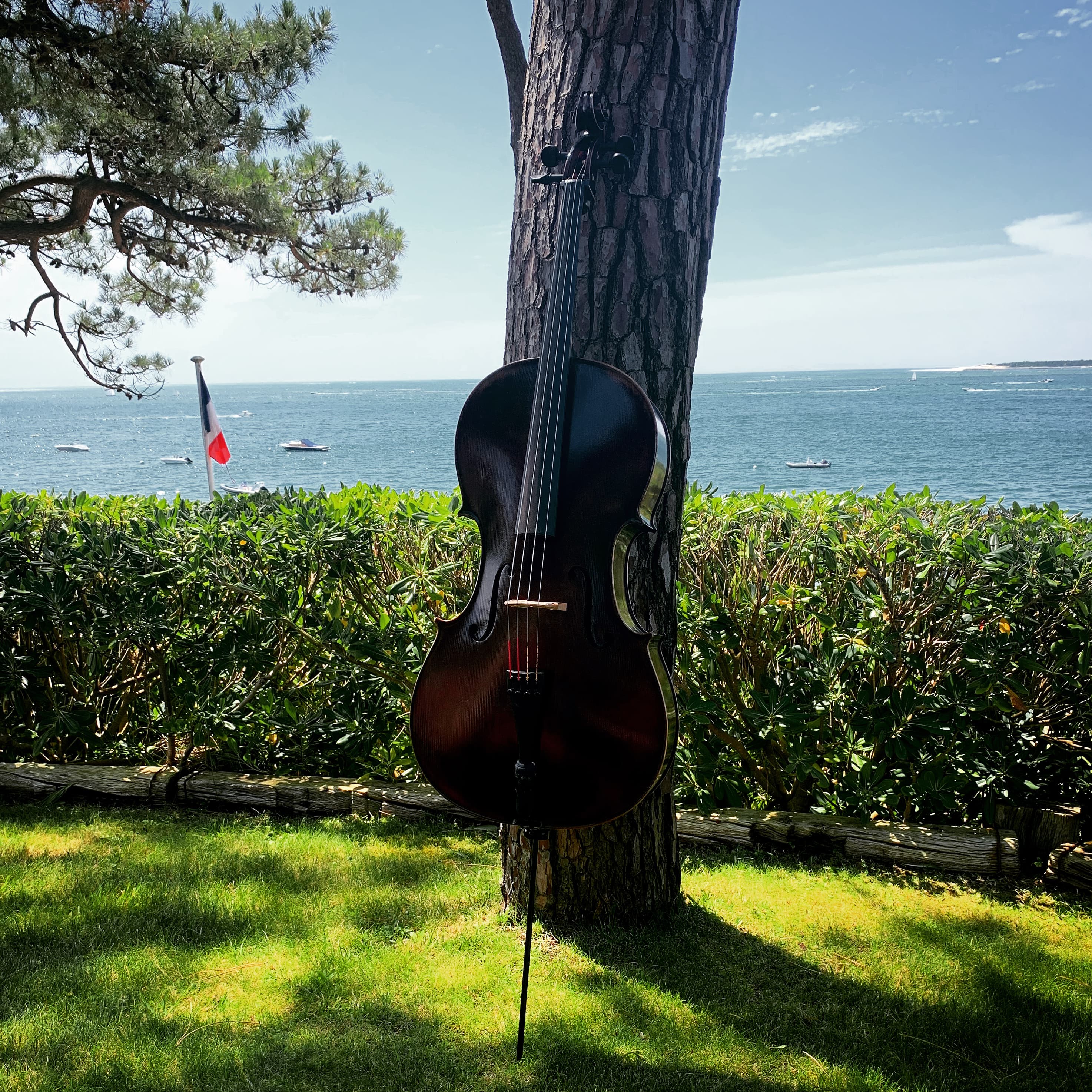
Violoncelle au calme
Cette playlist réunit des morceaux imaginés pour accompagner un retour au calme, porté par la douceur et les vibrations enveloppantes du violoncelle.
See the pieces
☀️ Élan & Motivation
Dans le but de retrouver de la motivation au quotidien.
See the pieces
What is 432 Hz music?
Verdi champions the “scientific pitch” of 432 Hz.
432 Hz music is tuned with an A at 432 Hz instead of the international 440 Hz standard. Listeners often describe this pitch as warmer and rounder, conducive to letting go.
In 1881, Giuseppe Verdi campaigned for this pitch, worried about singers' vocal fatigue. Italy adopted it in 1884 for its military bands, before 440 Hz prevailed in the 20th century.
What does research say? Pilot studies on small samples report a lower heart rate and better sleep. The results remain preliminary, and we say so plainly.
Instrumentation follows intention
The cello is at the heart of every piece. Depending on the intention, Mathyas surrounds it with piano, guitar, percussion or voice: nothing is generated, everything is played.
Depth
Cello
The low register carries the emotional accompaniment, closest to the human voice.
Clarity
Piano
Clean lines and a stable frame, for listening when the mind needs to settle.
Softness
Guitar
A warm, close texture, for falling asleep and the end of the day.
Drive
Percussion
A rhythmic support for pieces that accompany getting going again.
Presence
Voice
Most often without words: the voice as a timbre, so you are not left alone.

Mathyas Voisin, cellist and composer
“Not the applause: a breath that slows down, a tension that lets go, an evening that becomes bearable again.”
A cellist since the age of four, with a background in psychology, he has accompanied Grand Corps Malade, Slimane, Gims and Amel Bent on stage. Certified in sophrology since 2024, he now writes pieces built on the rhythm of a breath. He promises no cure and replaces no one. Every note is played, none is generated.
Frequently asked questions
What is 432 Hz music?
Music tuned with an A at 432 Hz rather than the 440 Hz standard. Verdi championed this pitch as early as 1881.
Why are some pieces in 444 Hz?
444 Hz is another tuning, slightly higher than the 440 Hz standard, often associated with energy and clarity. Each piece is tuned according to its intention: 432 Hz for calm and sleep, 444 Hz for momentum and focus.
Is the music generated by AI?
No. Each piece is composed, then played on real instruments and recorded in WAV. No note is generated.
Does 432 Hz music help you sleep?
Pilot studies report better sleep and a lower heart rate, on small samples. The results remain preliminary.
How should I listen to get the most out of it?
Headphones, a quiet place, a few minutes. Sessions last 20, 30 or 45 minutes.
Is listening free?
The 30-second excerpts can be played without an account. A free account gives access to three full tracks, replayable without limits.
What happens after my three free tracks?
They stay yours, with unlimited listening, forever. The full library will soon be offered as a paid option: you will be notified, with no commitment.
Three free tracks, kept forever.
Create a free account, choose three pieces, listen again without limits. No credit card.